Research Article - Annals of Biological Research ( 2025) Volume 16, Issue 1
Received: 16-Apr-2025, Manuscript No. ABR-25-164544; Editor assigned: 21-Apr-2025, Pre QC No. ABR-25-164544 ((PQ); Reviewed: 05-May-2025, QC No. ABR-25-164544; Revised: 05-Dec-2025, Manuscript No. ABR-25-164544 (R); Published: 13-Dec-2025
Introduction: The biological tests prescribed on test bulletins must include some information, essential for the test to be properly done and for obtaining a quality analysis report for better patient care. The aim of this study was to assess the quality of writing on biological test bulletins at the Bogodogo University Hospital.
Methodology: This was a cross-sectional descriptive-analytical study of prescribed medical test bulletins and potential prescribers at CHU-B. Biological analysis bulletins were collected over a 2-month period, from July to September 2020, at the CHU-B laboratory. The survey of prescribers, on the other hand, took place in the various clinical units of CHU-B over the same period.
Results: Of a total of 2012 medical biology test bulletins collected, only 187 that is tosay (9.29%) complied with the criteria defined in the study and the ISO.15189 standard. Of these 2012 bulletins, 662 (32.90%) were prescriptions for tests from different disciplines on the same bulletin. Medical interns accounted for 35.93% of prescribers and 27.2% of test requests came from the gynecology/maternity unit. The prescriber's contact was not mentioned in 98% of cases and 70.32% of test bulletins did not include clinical information. The nature of the sample was missing on 93.44% of test forms. The date of sampling, the time of sampling and the identity of the sampler were missing on all the 2012 bulletins.
Conclusion: This study has highlighted the poor quality of biological tests prescription at CHU-B. Enhanced skills in good prescription practices will be essential to improve the quality of medical prescriptions, for better patient care.
Prescription quality, Biological analysis test bulletin, Bogodogo University Hospital, Burkina Faso
Health, as a factor in well-being, is one of the components of national development. In Burkina Faso, the national healthcare system has been gradually built up through a number of reforms aimed at improving its performance [1]. Despite the progress in recent years in terms of healthcare provision, health systems still face challenges linked to the quality of care. Patient safety, patient care and the quality of the care provided are still the major concerns of the country's health authorities.
Patient management involves several stakeholders (prescribers, biologists, nurses, etc.). It is based on the following stages of the consultation including anamnesis, physical examination, prescription of complementary tests and treatment. Complementary tests, in particular, biological tests are virtually systematic when patients enter the healthcare system and constitute a fundamental element in their care [2]. To this end, the results of biological analyses play a key role in the diagnosis, treatment, follow-up, prognosis and prevention of human diseases or diseases that reveal any other change in the physiological state, with the exception of anatomical and cytopathological procedures [2,3]. Biological tests are prescribed on test bulletins, which must include some information essential to the proper conduct of the test and interpretation of the test reports.
In addition, the performance of a biological test is governed by normative and regulatory requirements which position the pre-analytical phase as a fundamental step in the quality control of biological tests. The pre-analytical process begins with a biological prescription (test bulletin) and ends with a sample ready for analysis [4].
Thus, the biological prescription should be of high quality, i.e., it should contain all the information required for the correct performance of the analyses that will lead to the interpretation of the reports essential for patient management.
However, it is deplorable to note a lack of quality in the preparation of medical biology test bulletins in the laboratory [3]. In Burkina Faso, a study carried out by Abdourame et al [5] as part of the free healthcare program at Yalgado University Hospital in Ouagadougou in 2017 revealed that only 67 of the 1,683 biological test bulletins collected were compliant; the study carried out by Bado at CHUP-CDG in 2020 reported that 16% of biological test bulletins were compliant.
It is in this context that it was deemed necessary to carry out a study on the quality of the writing of biological analysis bulletins at CHU-B (Bogodogo University Hospital) in order to better understand the reasons behind this poor practice and to formulate recommendations with the aim of improving patient care.
Study setting
The study was carried out in the laboratory's various units (biochemistry-hormonology, hemato-immuno-serology, bacteriology-virology and parasitology-mycology) and clinical units (pediatrics, obstetrics gynecology and reproductive medicine, rheumatology, neurology, oncology and clinical haematology, internal medicine, endocrinology and metabolic diseases, neurology, nephrology/haemodialysis, ophthalmology and visual exploration, ENT, cardiology, intensive care/anaesthesia, stomatology at CHU-B (Bogodogo University Hospital), which is a third-level reference hospital in the national health pyramid.
Type and period of study
This was a descriptive and analytical cross-sectional study of biological test bulletins prescribed at CHU-B (Bogodogo University Hospital) and a questionnaire interview to potential prescribers. Biological test bulletins and information from prescribers were collected over a two-month period from July to September 2020.
Study population
The study population consisted of biological test bulletins prescribed at CHU-B and potential prescribers of biological tests at CHU-B (general practitioners and specialists, interns, externs, etc.). The bulletins were made up of those prescribed free of charge and those directly paid for by CHU-B's clinical units. The “free of charge” bulletins are those prescribed under Burkina Faso's policy of free health care, for which the patient pays no analysis fees, unlike the “free of chage” fbulletins, the patient pays all test fees. This free of charge policy applies to pregnant women and children under 5.
Inclusion criteria
The test bulletins prescribed in the various clinical units of CHU-B and received at the laboratory during the study period. Prescribers present in the unit during the study (specialists and general practitioners, interns, externs) and who have approved of participating in the study.
Sampling
Exhaustive sampling of all test bulletins prescribed in hospital and received in the laboratory's various technical units for analysis during the study period. The prescribers were received in the units where they work on working days. In a given unit, all potential prescribers were enrolled to take part in the study.
Criteria for the validity of a test bulletin: Variables
Information about the patient (surname, first name(s), age, sex, the prescriber (full identity, qualification, signature, stamp), the requesting unit (name, unit), clinical information (symptoms, presumptive clinical diagnosis, physiological state, current treatment), date of prescription, date and time of sampling, identity of the sampler, test(s) requested and biological products used, filling in of tests or parameters belonging to different disciplines of biology on the same bulletin, non-conventional abbreviations.
Variables for prescribers
Reason(s) for requesting a biological prescription, reason(s) for the absence of important information on the bulletin.
Collection tools and techniques
A questionnaire was designed in accordance with the set compliance criteria (taking into account the different variables)
for collecting data on the test bulletins received at the laboratory during the study. Another questionnaire was also administered in the form of an interview with prescribers in the various clinical units.
Data processing and statistical analysis
The data collected on the data collection form were entered, processed and analyzed on a microcomputer using Epi info software version 3.5.3. Findings were commented and discussed. Graphs and tables were produced using Word 2010 and Excel 2010. Statistical calculations were made using the parametric chi-square(X2) test at 5% of consented alpha risk.
Ethical and deontological considerations
The study was authorized by the Managing Director of Bogodogo University Hospital and by the heads of the clinical units concerned before the start of data collection. Oral informed consent was given by prescribers before the start of each interview. They could withdraw at any time during the interview. The anonymity and confidentiality of the data collected were respected.
Findings
Out of a total of 2012 test bulletins collected, 978 (48.60%) were free of charge, 354 (17.59%) included at least one non-conventional abbreviation in the body of the prescription.
Distribution of bulletins by medical biology discipline
Biochemistry 57.15% and haematology 53.72% were the most frequently requested disciplines. Table 1 shows the frequency of test prescription by discipline.
| Disciplines in biology | Number (n) | Frequency (%) |
| Biochemistry | 1150 | 57.15 |
| Hematology | 1081 | 53.72 |
| Parasitology | 198 | 9.84 |
| Bacteriology/virology | 204 | 10.13 |
| Immunology/serology | 183 | 9.09 |
Table 1: Test prescription frequency by medical biology discipline.
Prescribing tests in several disciplines on a single bulletin
Of the 2012 test bulletins, 662 (32.90%) were for more than one discipline on a single bulletin. Several cases were recorded. Prescriptions concerning two different disciplines accounted for 521 (25.89%) of all the bulletins and 78.10% of prescriptions on a single bulletin. Table 2 shows the different requests for tests on a single bulletin.
| Requested disciplines | (n) | (%) |
| Two | ||
| Hematology-Biochemistry | 415 | 79.65 |
| Hematology-Parasitology | 54 | 10.36 |
| Hematology-Immuno/serology | 18 | 3.45 |
| Biochemistry-Immunology/serology | 21 | 4.03 |
| Parasitology-Immuno/serology | 1 | 0.19 |
| Parasitology-Bacteriology | 1 | 0.19 |
| Parasitology-Biochemistry | 11 | 2.11 |
| Total | 521 | 100 |
| Three | ||
| Hematology-Biochemistry-Immuno/serology | 32 | 22.85 |
| Hematology-Biochemistry-Parasitology | 106 | 75.71 |
| Hematology-Bacteriology-Parasitology | 1 | 0.71 |
| Bacteriology-Parasitology-Biochemistry | 1 | 0.71 |
| Total | 140 | 100 |
| Four | ||
| Hematology-Parasitology-Biochemistry-Immuno/serology | 1 | 100 |
| Total | 1 | 100 |
| Totals | 662 | |
Table 2: Distribution of bulletins by number of disciplines requested on a single report form.
Distribution of bulletins according to the prescriber's qualification indicated on the bulletin
In relation to this criterion, 354 (17.60%) of the bulletins were unqualified. Medical interns accounted for 723 (35.93%), doctors for 754 (37.47%). External trainees and health attachés were 173 (8.59) and 100 (0.4) respectively.
Distribution of bulletins by unit of origin
392 (19.48%) of test bulletins had no indication of the unit. 27.18% were from gynecology/maternity and 345 (17.14%) from pediatrics.
Test bulletin compliance criteria
Criteria relating to patient identification, notably full identity (99.60%), age (97.61%) and gender (94.18%), were completed on most bulletins. Those relating to prescribers, such as telephone contact, were on the bulletins in only 2% of cases. Criteria relating to the sample, such as the nature of the sample, were mentioned on only 6% of bulletins. Clinical information was mentioned on only 29.67% of bulletins. Table 3 shows the conformity of bulletins according to the conformity criteria. The nature of the sample didn’t appear on 93.44% of bulletins. The date of sampling, the time of sampling and the name of the sampler were completely missing on the 2012 bulletins.
| Compliance criteria | Yes | No | ||
| Number | (%) | Number | Percentage (%) | |
| Patient’s full identity | 2004 | 99.60 | 8 | 0.40 |
| Age | 1964 | 97.61 | 48 | 2.39 |
| Sex | 1895 | 94.18 | 117 | 5.82 |
| Prescriber’s signature | 1743 | 86.63 | 269 | 13.37 |
| Prescriber’s identity | 1686 | 83.79 | 326 | 16.20 |
| Prescriber’s qualification | 1659 | 82.45 | 353 | 17.54 |
| Stamp | 1598 | 79.42 | 414 | 20.58 |
| Prescriber’s contact (Pnone) | 40 | 2.00 | 1972 | 98.01 |
| Sampling type | 132 | 6.56 | 1880 | 93.44 |
| Clinical information | 597 | 29.67 | 1415 | 70.32 |
| Prescription date | 1988 | 98.80 | 24 | 1.20 |
| Sampling date | 0 | 0 | 2012 | 100 |
| Sampling hour | 0 | 0 | 2012 | 100 |
| Sampler’s identity | 0 | 0 | 2012 | 100 |
| Requesting unit | 1618 | 80.41 | 394 | 19.59 |
Table 3: Compliance with the various criteria.
Compliance frequency
Of the 2012 analysis reports, only 187 (9.29%) complied with the rules of good medical prescription.
Compliance according to prescriber’s qualification
Of the prescriptions made by doctors, 94 (12.46%) were compliant, while those made by interns were 80 (11%) compliant. Figure 1 shows bulletin compliance according to prescriber’s qualification.
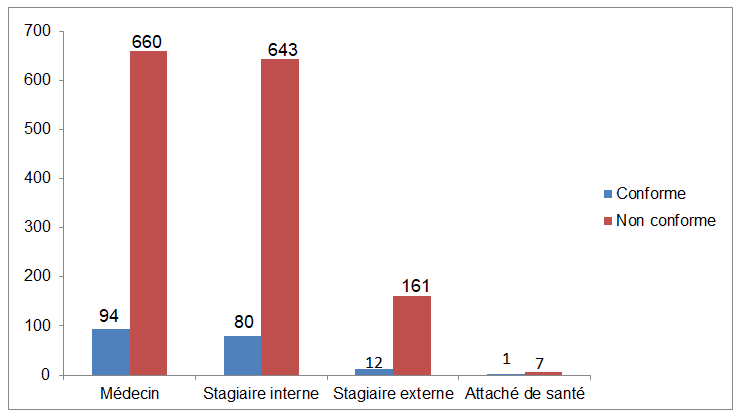
Figure 1: Bulletin compliance according to prescriber’s qualification.
The analysis of the data shows that there is no statistically significant relationship between compliance and prescriber’s qualification (p=0.06).
Bulletin compliance according to clinical unit
The pediatrics unit (hospitalization and emergency) was the unit that prescribed the most compliant test bulletins, with rates of 19.25% and 17.11% respectively. Table 4 shows the compliance of bulletins according to clinical unit.
| Requesting unit | Compliant bulletins | |||
| Yes | No | |||
| N | % | N | % | |
| Pediatrics hospitalisation | 36 | 19.25 | 76 | 5.30 |
| Pediatrics emergency | 32 | 17.11 | 201 | 14.02 |
| Cardiology | 7 | 3.74 | 61 | 4.26 |
| External consultations | 7 | 3.74 | 88 | 6.14 |
| Gynecology/maternity | 28 | 14.97 | 519 | 36.21 |
| Internal medecine | 5 | 2.67 | 35 | 2.44 |
| Nephrology | 5 | 2.67 | 69 | 4.82 |
| Neurology | 5 | 2.67 | 27 | 1.88 |
| Oncology | 9 | 4.81 | 36 | 2.51 |
| Ophtalmology | 1 | 0.53 | 10 | 0.70 |
| ENT | 7 | 3.74 | 28 | 1.95 |
| Intensive care | 5 | 2.67 | 35 | 2.44 |
| Rhumatology | 11 | 5.94 | 52 | 3.63 |
| Stomatology | 1 | 0.53 | 2 | 0.14 |
| Traumatology | 2 | 1.06 | 16 | 1.12 |
| Surgical emetgencies | 1 | 0.53 | 29 | 2.02 |
| Medical emetgencies | 27 | 14.43 | 147 | 10.26 |
| Total | 187 | 100 | 1433 | 100 |
Table 4: The compliance of bulletins by clinical unit.
The analysis of Table IV shows that there is a significant difference (p=0.00) between the compliance of bulletins and clinical units. 61 people were interviewed, including 38 doctors, 21 interns and 2 health attaches.
Reasons for inadequate completion of bulletins
Of those interviewed, 30 (50%) said they were due to “bad habits”. Table 5 shows the various reasons for the absence of important information on test bulletins.
| Reason for lack of information | Number (n) | Percentage (%) |
| Routine and therefore “bad habits” | 30 | 50 |
| Lack of time | 16 | 26.7 |
| Interpretation of results by prescriber | 11 | 18.3 |
| Lack of time | 16 | 26.7 |
| Negligence | 9 | 15 |
| Information is useless for analysis | 6 | 10 |
| Forgetfulness | 3 | 5 |
| Delegation of task without follow-up | 3 | 5 |
| Unsuitability of printout | 2 | 3.3 |
| Ignorance | 2 | 3.3 |
| Respect for medical confidentiality | 2 | 3.3 |
| Laziness to write | 1 | 1.7 |
Table 5: Reasons for lack of information.
This study showed that biochemistry and haematology tests were the most frequently requested in patient management, with 1150 (57.15%) and 1081 (53.72%) requests for tests respectively. This finding corroborates the conclusions of similar studies, such as the one by Abdouramane et al [5] carried out at the CHU-YO in Ouagadougou in 2019 and the other by Bado et al [6] at the CHUP- CDG in Ouagadougou in 2020. Indeed, most biochemistry tests such as blood glucose, creatinine, blood ionogram, azotemia and CRP, as well as haematology tests such as haemogram, blood grouping/Rhesus and haemostasis tests, are emergency tests. They are constantly prescribed to assess the general state of the patient's condition, in order to initiate emergency treatment, make a diagnosis or generally manage common pathologies. Other less frequently requested tests, such as bacteriology, are very often not requested to initiate emergency treatment. The study revealed that almost 40% of the bulletins included tests from several medical biology disciplines on a single test request bulletin. The use of a single fbulletin for tests from different disciplines could be explained by a shortage of printed test bulletins, or by ignorance of how laboratories work in a university hospital like that of Bogodogo. Several laboratories are grouped together in the unit and operate independently. Each laboratory has its own staff and logistics to ensure autonomous operation. This mixing of tests on the same bulletin causes delays in the processing of the biological product, as well as loss of the bulletin and biological specimen on which the analysis is to be carried out. In addition, the bulletin is overloaded, leading to misunderstanding and confusion when carrying out analyses. In this study, 17% of prescribers did not mention their identity, 18% of bulletins did not include the prescriber's qualifications, and of those who did, 98% did not mention their telephone contact. This useful information about the prescriber is an element of professional identification, which confers on the prescription the notion of responsibility and competence of the prescriber to better understand the findings that will come out of it. Knowing the prescriber's qualifications, the biologist can formulate and adapt the commentary according to his or her profile and the level of intervention with the patient. For example, when faced with the isolation and identification of a Meticilin-Resistant S aureus (MRSA), the commentary on the antibiogram may be brief for an infectiologist, but more detailed for a general practitioner.
The same applies to telephone contact: The biologist must be able to interact with the prescriber at any time during the analysis. For example, if Gram-positive or Gram-negative diplococci are observed under the microscope in cerebrospinal fluid, the biologist must be able to call the prescriber urgently, so that appropriate treatment can be instituted if meningitis is suspected. However, the inappropriate and abusive use of the telephone by both patients and those accompanying them could be one of the reasons for the absence of any mention of telephone contact on the bulletins. Of all the bulletins received, those produced by medical trainees accounted for 45% and those produced by doctors for 35.93%. Among the non-compliances of the prescribed bulletins, 88% were attributed to doctors and 89% to trainees. Although Bogodogo University Hospital is the most recent of the 3rd referral hospitals, it welcomes student trainees from the country's public and private universities under a collaboration agreement with these universities and colleges. In medical ethics, these trainees must receive theoretical and practical supervision, and even monitoring, from the regular practitioners who are already in the field. This high level of non-compliance among doctors could explain the trainees' lack of good practice in their units, and is a bad start for these future clinicians, who must ensure that patients are cared for according to the good practices they have been taught. According to the origin of the bulletins, 27% were from the gynecology/maternity department and 17% from pediatrics. These two departments had high non-compliance rates of 36% and 19% respectively among the bulletins on which the units were mentioned. The free-of-charge policy in force in Burkina Faso is applied in these two units. This means that the tests prescribed free of charge are analyzed at no cost to the patient. Generally speaking, there's a tendency to overuse anything that's easily accessible if there aren’t too many controls. This lack of rigor could have a negative impact on the correct use of test bulletins, especially as we found a statistical link between the origin of the bulletins and the non-compliance. The following criteria had acceptable compliance: patient’s identity (99%), prescription date (97.3%), age (96.7%) and patient’s gender (94.1%). These findings were close to those observed by Abdouramane et al. [5] and in the literature [7-9]. In fact, mentioning the patient's identity on the form and on the biological product container at the time of collection is all the more important as it helps to avoid mixing up tests and to carry out what really needs to be done. Age and sex must also be indicated, as this enables results to be interpreted by comparing them with literature values for the same age and sex. In certain situations, age must be known for the analysis to be carried out correctly. For example, in the course of an ordinary coproculture of an adult, it is not necessary to look for E. coli, since it constitutes 80% of the aerobic flora of the digestive tract. However, certain E. coli pathovars are implicated in gastroenteric infections in children under 3. An analysis of the bulletins revealed that the date and time of sampling were missing in 100% of cases. However, these are crucial during certain analyses; for example, in the interpretation of the findings of microbial cultures it is imperative to know the time between the collection of the product in the body and its culture on the culture media for the isolation of the germ. Given the fragility of certain bacteria, they can die if this delay is excessive and certain elements can also deteriorate making the interpretation difficult. The nature of the sample (blood, urine, cerebrospinal fluid, etc.) was not 100% included in the bulletins of the present study. Findings close to ours have been reported in the literature [10,11]. Mentioning the nature of the sample is important in the case of collection of bloody biological fluids (urine, ascites, pleural fluid, cerebrospinal fluid, etc.) which can be confused with blood and this can lead to the use of inappropriate reference values for the interpretation of the findings [7].
Clinical and therapeutic information was missing in more than 70% of the bulletins in this study. These findings were consistent with those observed in other African and Asian countries [12-12]. Mentioning clinical and therapeutic information can help the biologist in interpreting the findings. Indeed, the clinical condition of the patient helps the biologist to take into account a specific non-pathogenic bacterium during the interpretation as being the germ responsible for the infection. Also, during the evolution of certain pathologies, the diagnostic methods can be different depending on whether they are in the early or advanced phase. This is the case for typhoid fever where the search for the causal agent is carried out according to the stage of the disease, in the stools (coproculture) or the blood (blood culture) during the first week. At an advanced stage, the isolation of the germ in question could be tricky and the ideal method for diagnosis is the search for antibodies directed against this germ. It therefore seems obvious that it is necessary to note clinical information, but it would still be necessary for it to be adapted to the test requested. Sakande et al. in 2003 noted during their study, a mismatch between the clinical information provided and the tests requested.
Furthermore, mentioning clinical and therapeutic information raises another question relating to medical confidentiality. It was raised by 3.3% of those interviewed during this study. Indeed, in our context, the patients' companions (parents, guardian, spouse, friends, etc.) are the resource people who must complete certain formalities (check whether the test is feasible, administer the code, pay the relevant fees) before the tests are carried out. After these formalities, these companions are responsible for bringing the samples taken with the completed bulletin(s). While biologists are subject to the same rules of ethics and medical professional conduct as prescribers, this is not the case for these companions who nevertheless have access to information that is subject to medical confidentiality that the person concerned may want to keep confidential.
The findings of this study showed that out of a total of 2012 bulletins, only 187 or 9.29% were considered compliant with the rules of good medical prescription. These findings confirm that the writing quality of the bulletins is low in Burkina Faso. Indeed, similar studies such as those carried out by Djobo et al. in Niger in 2022 found frequent cases of non-conformity superimposable to ours [17]. Higher frequent cases of non-conformity such as those observed in Ouagadougou at the CHU P CDG by Bado et al. in 2020 (16.24%) [6] and at the CHU-YO (Yalgado University Hospital) in 2008 by Ouédraogo et al. (18.5%) [2] have been reported. On the other hand, our findings were higher than those observed by Abdrarame et al. in 2017 (4%) [5]. The poor quality of the prescription makes it difficult to carry out and interpret the findings of biological tests. This situation compromises the optimal and rational use of the diagnostic support tool that laboratories represent.
Regarding the main reasons for these inadequacies, 50% of respondents believe that it is the "bad habit" of filling out due to routine which can lead an agent to lose good manners over time, especially in the absence of regular monitoring and 26.7% blamed "lack of time". Despa [3] in its study on the inadequacy of clinical information found, we have 25% of prescribers who evoked the "bad habit"; 25% who justified it by the fact that "the prescriber interprets his own finding"; and 10% who also mentioned the "lack of time". Dogethera et al. in 2016 [18] propose the use of software for entering prescriptions for biological analyses in order to improve their writing skills. This prospect of using reliable software that will strengthen health systems therefore deserves to be carefully examined in the context of Burkina.
The compliance of the bulletins prescribed at CHU B was assessed according to the recommendations on the rules of good writing practices for biological analysis bulletins. The findings of this study confirm that the writing quality of biological analysis bulletins is low in Burkina Faso. Building the test bulletin prescribers’ capacity, strengthening the training of the staff prescribing test bulletins on good prescribing practices will therefore be essential for improving the quality of medical prescriptions for better patient care. Also, the dissemination of the findings of this study in the units to managers and potential prescribers and the carrying out of similar evaluations on a regular basis could lead to the improvement of medical prescriptions.
• The findings of this work have thus helped to highlight the poor quality of the prescription of biological tests at the CHU-B due to the fact that only a low percentage of compliance was obtained.
• For better treatment of biological products in the laboratory in order to be able to carry out a good interpretation of the analysis reports, strict compliance with good laboratory practices is essential.
• This study shows the relevance of correctly filling out test bulletins to guarantee reliable findings and ensure better patient care.
• This observation should encourage the correct completion of the test request form in order to avoid non-conformities, which could lead to an extension of the time taken to communicate test findings and therefore a delay in therapeutic care.
The authors declare no conflicts of interest.
Stella Yameogo: Ensured the collection of test bulletins and wrote the body of the article. Absatou BA/KY: Principal investigator of the work and corrector of the article, authorized the collection of test bulletins. Issa Tonde: Corrected the article. Arnaud Diendere: Corrected the article. Idriss Traore: Corrected the article. Salimata Diallo: Participated in data collection. Issoufou Ouedraogo: Participated in data collection. Idrissa Sanou: Corrected the article.
The authors thank all the respondents who participated in this study. Thanks also to all those who provided essential material for the study.
[Crossref] [Google Scholar] [PubMed]
[Crossref] [Google Scholar] [PubMed]
[Crossref] [Google Scholar] [PubMed]
[Crossref] [Google Scholar] [PubMed]