Research Article - Annals of Biological Research ( 2025) Volume 16, Issue 1
Received: 29-Jun-2024, Manuscript No. ABR-23-140318; Editor assigned: 02-Jul-2024, Pre QC No. ABR-23-140318 (PQ); Reviewed: 16-Jul-2024, QC No. ABR-23-140318; Revised: 02-Jan-2025, Manuscript No. ABR-23-140318 (R); Published: 09-Jun-2025
It has become extremely difficult to guarantee the availability of safe food to an ever-growing population due to declining land resources, rising residual toxicity load, and declining safe water levels for agriculture and drinking. Besides, it has become difficult to maintain a sustainable production and productivity using the conventional agricultural system. In this context, hydroponic system has been a potential and widely accepted technology to confront the above issues. In addition to ensuring safe food, hydroponics also maximizes vertical space utilization, improves water efficiency, and reduces environmental problems related to crop production. The present experiment results revealed that vigorous growth of Palak crop under hydroponics system was observed with better quality produce. The average weight of Palak plant was harvested with 45.44 g per plant in the hydroponic system. Palak crop in the system produced profuse root mass with average root length of 16.00 cm. This paper deals with comprehensive study of hydroponic effect on growth and productivity of Palak crop.
Hydroponics, Leaves, NFT, Palak, Root
For plants, the soil is typically the best growing medium. It supports plant growth by giving it anchorage, nutrients, air, water, etc. There are many ways to define soil to serve various needs, but to an agriculturist, the soil is the medium for crop growth, an anchor for plants, and a source of nutrients, water, and air that plants need to survive. These soils however, frequently cause significant barriers to plant growth. Some of them include the existence of nematodes and disease-causing organisms, unfavourable soil reactions, soil compaction, inadequate drainage, erosion-caused degradation, etc. Additionally, the use of intensive cropping systems has come under scrutiny due to declining land and water resources, rising levels of residual toxicity in vegetables, the rapid growth rate of the urban population, and increased consumer awareness of organically grown foods. Because of their unfavourable topographical or geographical conditions, fertile, farmlands are scarce in many urban and industrial areas, where the soil available is limited for growing crops. In these contexts, the hydroponics method could be adopted successfully [1].
With the aid of nutrient solution, hydroponics is a technique for growing crops without soil [2]. The main benefits of hydroponics include its small area, ability to handle flows of any size, ability to completely eradicate weeds and soil-borne diseases, and efficiently utilize vertical space [3]. In areas of a country or regions of countries with little acreage and also in small countries with large populations, hydroponic methods provide fresh vegetables. It might be beneficial to give the native population enough fresh vegetables [4]. Soilless techniques consistently produced plants with higher quality, higher yields, quicker harvests, and higher nutrient contents [5]. Additionally, this system aids in the management of the production system for the effective utilization of natural resources and the reduction of malnutrition, which are both challenges caused by global warming [6].
Globally, leafy vegetables, followed by tomatoes, account for the majority of hydroponically grown crops. Palak (Spinaciaoleracea L.) is one of the healthiest leafy vegetables consumed worldwide [7]. Stated that Palak contains significant amounts of the carotenoid vitamins A, lutein, and zeaxanthin as well as dietary fiber, iron, and other vitamins and minerals. It also contains compounds like flavonoids that have high antioxidant properties. Additionally, Palak has choline and inositol, these two nutrients that alleviate the risk of arteriosclerosis, or artery hardening [8]. Although hydroponics depends on water heavily to operate, it is interesting to note that it uses 90% less water than traditional soil farming because the water in the systems is recycled until the crops are ready for harvest rather than being washed away in runoffs. Hence, this study was undertaken to evaluate the growth and yield potential of Palak under a hydroponics system [9].
Experimental site and details
An experiment was conducted at the College of Agriculture, Kotwa, Azamgarh, Uttar Pradesh, India to study the effect of the hydroponics system on the growth and yield of the Palak plant [10]. The experimental site is located at 26º1’ N Latitude and 83º 8’ E Longitude with 84 m above MSL. This study was made during the winter of 2021-22. The maximum and minimum temperatures were ranging from 14°C to 28°C and 4°C to 16°C, respectively with an average temperature of 20.9°C during the experimental period [11]. The relative humidity ranged from 45 to 90% with an average RH of 68.38%. The average wind velocity was 6.2 kmph at the experimental study site. Palak var. All Greenwas selected for the experiment purpose [12]. The nursery for growing the Palak crop was established in the plastic portray in November 2021 and transplanted to the hydroponic system on 16th December 2021 [13]. The NFT hydroponic system unit is made of commercially available PVC pipe with a 4-inch diameter. Five equal lengths of 20 feet pipes with a distance of 25 cm were fixed on the frame of cast iron angle with the help of nut and bolt and 18 holes were drilled with help of a three-inch driller pit on each pipe to accommodate 18 plants in each row [14]. The three-inch planting mesh cups were used in the system to place the plant after filling the mixture of coco peat, perlite and vermiculite in a 3:1:1 ratio. The water and nutrient solution have been supplied by using a 500 L capacity water tank with sand and disc filter types. Throughout the experimental period, a pH of 6.5 to 7.3 was maintained [15].
During the study, the plant height (cm/plant) was observed from the bottom of the plant (close to the surface of the substrate) to the tip of the leaf as well as leaf characters such as leaf length (cm), leaf breadth (cm) and leaf number (leaves/plant) were measured from the first true leaf [16]. The fresh and dry weight of shoots and roots (g per plant) and root length (cm) were also measured from the experiment [17]. Using the critical difference test, the means of significant effects were divided. A 5% (P 0.05) level of probability was used for all statistical significance tests [18].
Plant height and leaf characters
The plant height of Palak showed a significant variation among the mean plant height of Palak grown in different rows under hydroponics system. The plant height ranged from 11.39 cm to 24.63 cm with a mean value of 18.80 cm (Table 1). The higher plant height was observed in this study from the 4th row of the hydroponic system followed by the 3rd row (21.89 cm). Because roots are responsible for nutrient uptake to support crop growth, this may be explained by Palak growing more effectively in soil-free and hydroponic systems [19]. The lower value of 11.39 cm plant height was observed from the 1strow plant. Sardare and Admane corroborated plants grown in hydroponics are healthier and more reliable as compared to plants grown in a field.
| Row | Plant height (cm) | Leaf length (cm) | Leaf breadth (cm) | Leaf area (cm2) | No. of leaves/plant |
| 1 | 11.39 | 4.93 | 3.93 | 19.39 | 61 |
| 2 | 16.53 | 6.07 | 3.96 | 24.08 | 56 |
| 3 | 21.89 | 6.37 | 5.3 | 33.76 | 65 |
| 4 | 24.63 | 7.93 | 7.7 | 61.06 | 71 |
| 5 | 19.55 | 6.3 | 6.17 | 38.87 | 48 |
| Mean | 18.8 | 6.32 | 5.41 | 35.43 | 60.2 |
| CD | 0.88 | 0.31 | 0.33 | 2.68 | 1.63 |
| SE (m) | 0.28 | 0.1 | 0.1 | 0.84 | 0.51 |
Table 1: Plant height and leaf characters of Palak plant grown under hydroponics system.
Similarly, the leaf area of the Palak plant in this study was found to be higher with a value of 61.06 cm2 as recorded in the 4th row plants of the hydroponic system followed by the 3rd plants (Table 1). The least value of 19.39 cm2 was observed from the plants growing in 1st rows. The length and breadth of leaves showed larger sizes (7.93 cm and 7.70 cm, respectively) in the corresponding plants could be the reason for producing higher leaf area in the 4th row plants. The lower size of 4.93 cm and 3.93 cm of leaf length and breadth, respectively could be the result of the lower leaf area of the first-row plants. The mean leaf area in this study was 35.43 cm2 indicating the plants growth was satisfactory when Palak grew in the hydroponics system. The number of leaves per plant significantly varied among the plants grown in different rows of hydroponics system. The mean number of leaves per plant was 60.23 in this study. A higher number of leaves per plant was observed from the plants grown in the 4th rows (71) followed by the 3rd row (65) and first row (61). The lower number of leaves per plant (48) was recorded in the 5th row plants. The advantageous effects of controlled environments helped produce more yield in the hydroponic system. Gashgari et al., and Agarwal et al., reported that the productivity of vertical farming systems is higher than that of conventional systems. Jensen claims that the hydroponics method produces more lettuce yield than open fields do.
Leaf and root weight and root length
In this study, the fresh and dry weight of the leaf and root of Palak was recorded during the experimental period and given in Table 2. The fresh and dry weight of leaves per plant significantly differed among the plants grown in different rows of hydroponics system. The fresh weight of leaves per plant ranged from 19.54 g to 73.56 g with a mean value of 45.44 g. A significantly higher fresh weight of leaves per plant (73.56 g) was produced from the plants grown under 3rd row of the system followed by 4th row. Plants grown in the first row of the system showed a lower fresh weight of leaves per plant. The dry weight of leaves per plant ranged from 2.36 g to 6.73 g with a mean value of 4.62 g during the study. Corresponding to the fresh weight of leaves, the dry weight of leaves per plant was significantly higher with the plants grown in the 3rd row (6.73 g) followed by 4th row (5.96 g). The lower dry weight of leaves per plant was found in first-row plants.
| Row | Fresh weight of leaves/plant (g) | Dry weight of leaves/plant (g) | Fresh weight of roots/plant (g) | Dry weight of roots/plant (g) |
| 1 | 19.54 | 2.36 | 11.47 | 2.09 |
| 2 | 42.71 | 4.49 | 10.09 | 1.62 |
| 3 | 73.56 | 6.73 | 18.51 | 5.05 |
| 4 | 63.24 | 5.96 | 21.45 | 6.4 |
| 5 | 28.14 | 3.56 | 9.69 | 1.5 |
| Mean | 45.44 | 4.62 | 14.24 | 3.33 |
| CD | 1.6 | 0.26 | 0.72 | 0.13 |
| SE (m) | 0.5 | 0.08 | 0.22 | 0.04 |
Table 2: Fresh and dry weight of leaves and roots of Palak plants grown under hydroponics system.
In contrast, the fresh and dry weight of roots was observed as higher with plants grown in 4th row (21.45 and 6.40 g, respectively) followed by 3rd row plants (18.51 and 5.05 g, respectively). The plants grown in the 5th row showed a lower fresh and dry weight of roots per plant (9.69 and 1.50, respectively) which was statistically similar to the plants of 2nd row (10.09 and 1.62, respectively). Plants that had been exposed to water treated in hydroponics had longer roots, which may have been a result of their natural inclination to spread their roots out into deeper areas of the growth medium in times of nutritional stress.
In addition, during the experiment, a higher root length was observed from the plants grown in the 2nd row (22.9 cm) of the system followed by 4th (17.23 cm) and 5th rows plants (16.18 cm). The least value of 9.87 cm was noticed from the 3rd row plants. The overall mean of root length in the hydroponics system was 16.00 cm in the experimental study (Figure 1 Root length (cm) of Palak plant grown under hydroponics system).
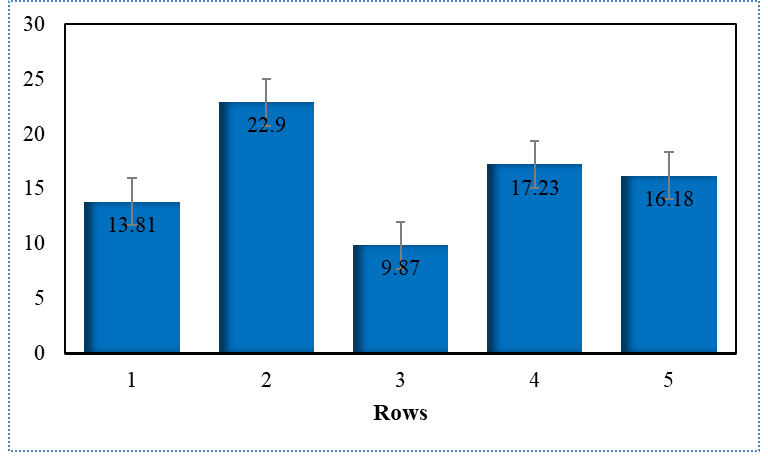
Figure 1: Root length (cm) of Palak plant grown under hydroponics system. Error bars represent standard error.
Dry Matter Production (DMP) and Shoot to Root (SR) ratio
Plants grown in the hydroponics method significantly varied their shoot and root dry matter production from 12.65 to 9.15% and 15.48 to 29.84%, respectively with a mean value of 10.76 and 21.38, respectively (Figure 2). Plants of 5th row (12.65%) could produce significantly higher shoot DMP followed by first row plants (12.08%). The lower value was true in the plants of 3rd and 4th rows as 9.15 and 9.42, respectively. It indicates plants of 3rd and 4th rows plants had higher moisture content and more succulency than first and 5th rows plants resulting in lower DMP. However, plants of 4th row had shown higher root DMP (29.84%) followed by 3rd row plants (27.28%). The lower value of root DMP (15.48%) was observed with 5th row plants. The crop grown in the water culture tends to produce more succulent leaves and contains more moisture content. In our study, the plants were found to be more moisture content and more succulent leaves.
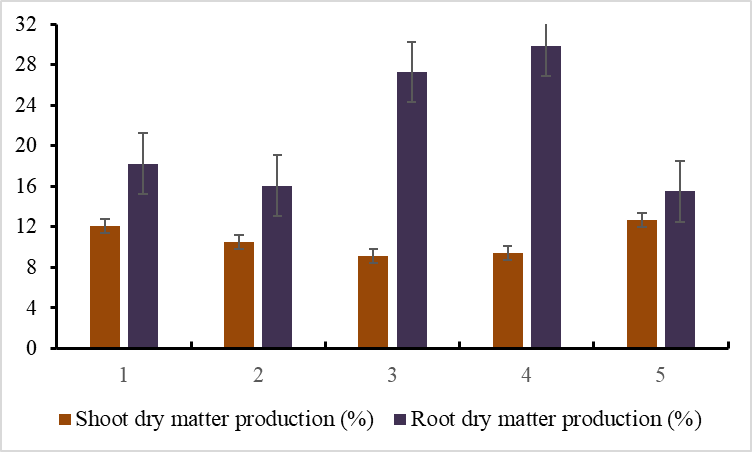
Figure 2: Dry matter production of shoot and roots of Palak plant grown under hydroponics system. Error bars represent standard error.
Regarding the Shoot to Root (SR) ratio on a weight and length basis, the SR ratio on a weight basis ranged from 4.23 to 1.70 with a mean value of 3.15. Similarly, the SR ratio on a length basis ranges varied from 2.22 to 0.72 with a mean of 0.72 (Figure 3). The SR ratio on a weight basis, a significantly higher SR ratio (4.23) was recorded from the plants grown in the 2nd followed by 3rd rows (3.97) and lower in the first row plants (1.70). While the SR ratio on length basis, the higher SR ratio (2.22) was recorded in the 3rd row followed by 4th row plants (1.43). The 2nd row plants (0.72) grown in the system showed a lower SR ratio.
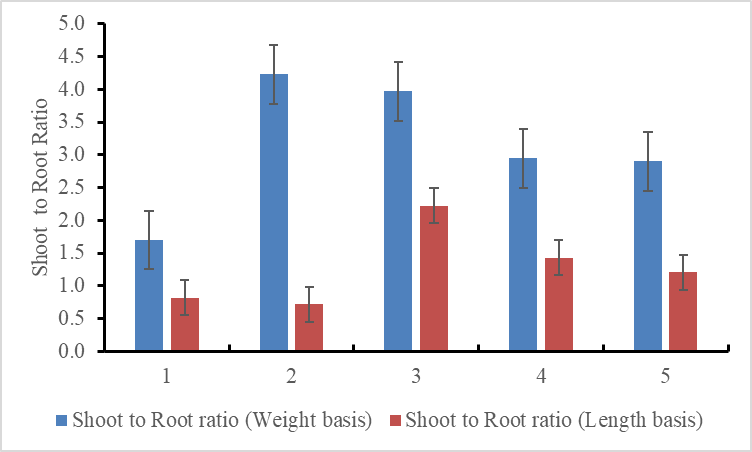
Figure 3: Shoot to root ratio of Palak plant grown under hydroponics system. Error bars represent standard error.
The experimental results proved that the effect of hydroponically grown plants is superior to that of growing in field conditions as the height of the plants increased faster. The crops produce more leaves and more succulent leaves with high nutritive values. The crops in the hydroponics are exposed to less incidence of pest and disease problems thus safe to consume from any pesticide chemicals. However, the experiment should be extended on a larger scale in the future to investigate whether the hydroponic system will satisfy both present and future market demands as well as the long-term needs of the agricultural system for the well-being of people and the economy.
[Crossref] [Google Scholar] [PubMed]
[Crossref] [Google Scholar] [PubMed]
[Crossref] [Google Scholar] [PubMed]
[Crossref] [Google Scholar] [PubMed]